The Science of Energy
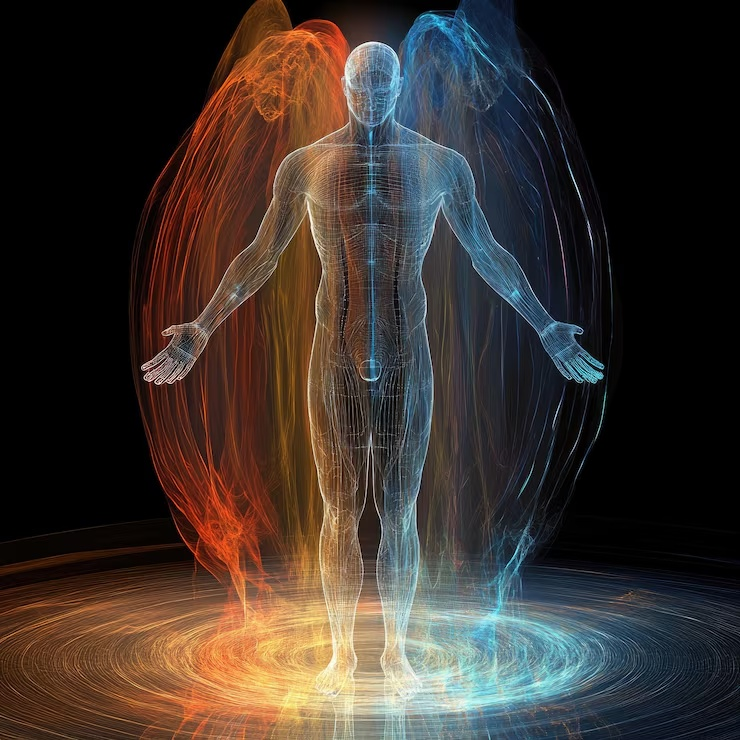
Everything around us is made of energy. The food we eat, the warmth of the sun, the movement of our bodies, and even the matter that makes up our cells can be understood in terms of energy.
So, what exactly is energy?
In simple terms, energy is the ability to cause change or make something happen. Energy can take many forms—including heat, light, movement, electricity, chemical energy, and the energy stored within matter.
Energy can also change from one form to another. For example, when you eat food, your body converts the chemical energy in that food into energy your cells can use for movement, growth, repair, and other functions.
Matter and Energy Are Connected
One of the most famous scientific equations in history helps us understand an important relationship between matter and energy:
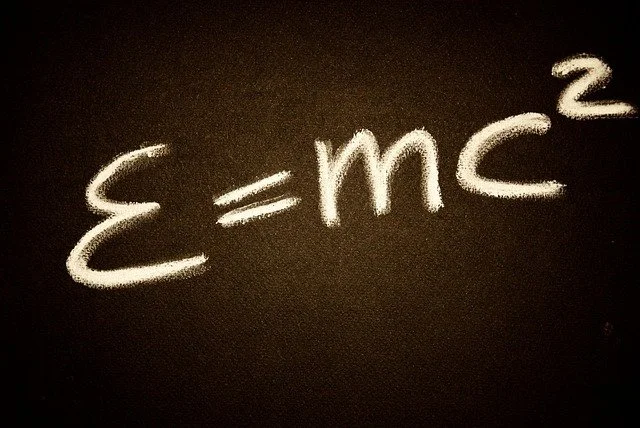
E = mc²
Albert Einstein's equation tells us that matter and energy are deeply connected. The equation means that energy (E) is equal to mass (m) multiplied by the speed of light (c) squared.
You don't need to be a physicist to appreciate what this means.
Because the speed of light is an extremely large number, even a small amount of mass represents a very large amount of energy. In other words, matter can be understood as a concentrated form of energy, and energy can be converted into matter under the right conditions.
This understanding changed the way scientists think about the physical world.
What Does This Have to Do With the Human Body?
Our bodies are not static. They are constantly using, producing, storing, and exchanging energy. Chemical reactions are taking place in our cells every second, electrical signals travel through our nervous system, and our bodies continuously interact with the energy around us.
At LightBridge Biofield Resonance, we are interested in exploring another aspect of this picture: the body's biofield—the complex electromagnetic and other measurable signals associated with living systems—and what researchers are learning about how energy and information may relate to human well-being.
The science is still developing, and many questions remain. Our goal is not to replace conventional medical care, but to explore this fascinating area of science while keeping the focus on the whole person.
The Body Is an Electrical and Electromagnetic System
We often think of the human body as being made up of bones, muscles, organs, and cells. But there is another fascinating dimension to our biology: the body is also an electrical and electromagnetic system.
Every living cell maintains electrical differences across its cell membrane. As cells communicate and function, electrical activity is constantly taking place throughout the body. The heart and brain are two of the clearest examples.
The Heart
The heart is an electrical organ as well as a muscular one. Each heartbeat is initiated and coordinated by electrical activity within the heart.
This electrical activity can be measured at the surface of the body with an electrocardiogram (ECG).
Because moving electrical charges also produce magnetic fields, the electrical activity of the heart is accompanied by a measurable magnetic field. This can be detected with specialized instruments called magnetocardiography (MCG).
The Brain
The brain is also constantly generating electrical activity as billions of neurons communicate with one another.
The electrical activity of groups of neurons can be measured with an electroencephalogram (EEG). The magnetic activity associated with this electrical activity can also be measured using magnetoencephalography (MEG).
So when we talk about the body's electrical and electromagnetic activity, we aren't talking about something purely theoretical. These are measurable physiological phenomena.
Energy, Waves, Frequency and Vibration
Energy can appear in many different forms. We experience it as heat, movement, electricity, light and sound, among others.
Many forms of energy can be described as waves or oscillations. A wave is a repeating pattern of change that can be described by characteristics such as frequency, wavelength and amplitude.
Frequency simply describes how often something repeats or oscillates. It is measured in cycles per second, or hertz (Hz).
Sound, for example, is produced by vibrations traveling through a medium such as air. Light is different: it is electromagnetic radiation and does not require a physical medium to travel.
At the microscopic level, our bodies are also constantly in motion. Molecules vibrate, chemical reactions occur, electrical charges move, and biological systems continually exchange energy and information.
In this sense, frequency and vibration are important parts of how we describe the dynamic nature of energy and matter.
Nikola Tesla and the Language of Frequency
Nikola Tesla devoted much of his life to understanding electricity, oscillation, resonance and frequency. His experiments demonstrated how electrical systems could be tuned to particular frequencies and how resonance could dramatically amplify an effect.
A quotation commonly attributed to Tesla says:
“If you want to find the secrets of the universe, think in terms of energy, frequency and vibration.”
Tesla's fascination with vibration and frequency is illustrated by his 1900 essay, The Problem of Increasing Human Energy, in which he wrote about electrical currents having an extremely high “frequency or rate of vibration” and described the importance of tuning electrical circuits to particular vibrations.
His work helped establish principles of oscillation, resonance and tuning that remain fundamental to electrical engineering today.
Why Coherence Matters
Another important concept when we talk about energy and living systems is coherence.
In simple terms, coherence describes a state in which different parts of a system are organized, synchronized or working together in a coordinated way.
Think of an orchestra. Each musician is producing sound, but when everyone follows the same rhythm and works together, the result is organized and harmonious rather than chaotic.
Biological systems are similarly complex. The heart, brain, nervous system, respiratory system and countless cellular processes are continually interacting with one another.
Researchers have observed forms of synchronization and coherence in biological activity, including patterns of electrical activity in the heart and brain. The scientific literature on biofield physiology explores whether the electromagnetic, biophotonic and other fields generated by living systems may be part of the way biological organization and information flow occur.
Coherence does not mean that everything in the body is operating at one frequency. Rather, it refers to meaningful coordination among different processes within a complex system.
This idea of organization, communication and coherence is particularly interesting when we begin exploring the biofield.
So, What Is a Biofield?
If the human body generates electrical and electromagnetic activity, and if living systems are constantly exchanging energy and information, could there be a larger field of activity associated with the living organism?
This is where the concept of the biofield comes into the picture.
The term biofield was coined by the National Institutes of Health and is used in scientific literature to describe a proposed organizing field associated with living systems. Researchers have discussed electromagnetic activity, ultraweak photon emissions, electrical activity of cells, and other measurable phenomena as possible components or expressions of biological fields. At the same time, biofield science is still an emerging area of research, and many questions remain unanswered by mainstream science.
Research Into Biofield Therapy Is Expanding
As interest in the relationship between energy, biology, and human health continues to grow, researchers are beginning to investigate biofield therapies using increasingly sophisticated scientific methods.
One recent example comes from The University of Texas MD Anderson Cancer Center, where researchers conducted a series of preclinical experiments examining whether biofield therapy could influence pancreatic cancer cells and tumor growth.
The research included laboratory studies using human and mouse pancreatic cancer cells, patient-derived tumor organoids, and mouse models. The researchers compared biofield therapy with both sham and incubator control groups.
The study reported that biofield therapy was associated with reduced proliferation and invasiveness of several pancreatic cancer cell lines, changes in cellular voltage potential and mitochondrial structure, and reduced primary tumor growth and liver metastasis in certain mouse models. The researchers also investigated possible biological mechanisms, including changes involving the FOXM1 gene and cell-cycle regulation.
These findings are interesting because some of the effects measured in the study were objective biological changes, rather than simply changes in how a person reported feeling.
Research Source:
Yang, P., Wei, D., Chakraborty, S., Nguyen, P., Cusimano, A., Deng, D., Iqbal, S., Nelson, M., Cui, M., Dai, J., Gagea, M., Wagner, R., Li, Y., & Cohen, L. (2026). The preclinical effects and mechanisms of biofield therapy on pancreatic cancer cell growth and metastasis. Cancer Medicine, 15(4), e71726. https://doi.org/10.1002/cam4.71726
When Energy Meets Biology
If an energy-based intervention produces a measurable change in a biological system, an important question naturally follows:
What could be happening at the cellular level?
Our cells are not simply tiny bags of chemicals. They are dynamic electrical and chemical systems, constantly exchanging ions, transmitting signals, producing energy, and responding to their environment.
Every cell maintains an electrical difference across its outer membrane. This is called the cell membrane potential.
This electrical potential is created largely by differences in the concentration of charged particles, or ions, such as sodium, potassium, calcium, and chloride, inside and outside the cell. Specialized proteins called ion channels and pumps regulate the movement of these ions across the membrane. Changes in membrane voltage can, in turn, influence cellular signaling and processes such as nerve communication, muscle contraction, and hormone secretion.
In other words, electricity is part of the language cells use to communicate and coordinate their activities.
The Cell's Electrical Potential
The electrical potential across a cell membrane is not fixed. It can change in response to signals from inside or outside the cell.
These changes can affect the behavior of ion channels and other membrane proteins, which can alter the flow of ions and initiate downstream cellular signals.
This is an area of growing interest in bioelectricity—the study of how electrical properties influence biological processes.
Researchers have found that bioelectric signals can participate in processes including cell communication, development, regeneration, and cell behavior.
This gives us an intriguing possibility to consider:
If the electrical state of a cell can influence what the cell does, could changes in an external energy environment also influence cellular behavior?
That is a scientific question—not a settled conclusion—and researchers are beginning to investigate it.
Mitochondria: Where Energy Becomes Usable
Another important part of this story is the mitochondrion.
Often called the "powerhouse of the cell," mitochondria convert energy from nutrients into ATP (adenosine triphosphate), the primary energy currency used by cells.
This process depends upon an electrical and chemical gradient across the inner mitochondrial membrane. The electron transport chain moves protons across this membrane, creating an electrochemical gradient. ATP synthase then uses this gradient to produce ATP.
But mitochondria do more than produce energy.
Their membrane potential also participates in cellular signaling, calcium regulation, reactive oxygen species signaling, and mitochondrial quality control. In other words, the electrical state of the mitochondria is connected to much more than energy production alone.
This makes mitochondria particularly interesting when scientists investigate whether an intervention that appears to involve energy could produce measurable changes within a cell.
What Did the MD Anderson Study Find?
The recent MD Anderson research provides an intriguing example.
In a series of preclinical experiments published in Cancer Medicine in 2026, researchers examined the effects of biofield therapy on human and mouse pancreatic cancer cells, patient-derived tumor organoids, and mouse tumor models.
Among their findings, the researchers observed:
changes in the cell membrane voltage potential of pancreatic cancer cells;
changes in the structure of mitochondria, including mitochondrial swelling and alterations in their internal structure;
changes in cell-cycle activity;
reduced proliferation and invasiveness of several pancreatic cancer cell lines; and
effects on tumor growth and liver metastasis in certain mouse models.
The researchers reported a 36.7% reduction in measured cell voltage potential in PANC-1 cells following biofield therapy, with similar effects observed in other cell models.
These findings are particularly interesting because they point toward measurable changes occurring inside the biological system, rather than simply changes in how a person feels.
But there is an important distinction.
The researchers have not established how the biofield intervention produced these changes.
The authors specifically state that the physical mechanisms remain unknown. They discuss possibilities including electromagnetic fields and biophoton emissions, but those mechanisms were not directly tested in this study.
And because this was preclinical research involving cells, organoids, and animal models, the findings cannot be interpreted as evidence that biofield therapy treats or cures cancer in people.
However, what the study does provide is a fascinating scientific question:
Can an energy-based intervention produce measurable changes in biological systems, and if so, what mechanisms might explain those changes?
That question deserves further investigation.
From Electrical Signaling to Coherence
This brings us back to another important concept: coherence.
Living systems contain countless processes occurring simultaneously. The heart beats, the lungs breathe, neurons communicate, cells exchange ions, mitochondria produce ATP, and biochemical reactions occur continuously.
These processes don't operate independently. They interact and influence one another.
In physiology, coherence can describe the degree of organization or synchronization between rhythmic processes. Researchers can study relationships between signals such as heart rhythms, respiration, blood pressure, and brain activity.
A simple way to picture coherence is to imagine an orchestra.
Each instrument produces its own sound. But when the instruments are coordinated—following the same rhythm and responding to the same musical structure—the result becomes organized and harmonious.
The individual instruments haven't stopped being individual. They are simply working together.
The human body is vastly more complicated than an orchestra, but the analogy helps illustrate an important principle: biological function depends not only on individual parts, but also on how those parts communicate and coordinate with one another.
Why Coherence Is Important to Biofield Research
This is where the concept of biofield resonance becomes particularly interesting.
If living systems generate electrical, electromagnetic, chemical, mechanical, and other forms of signaling, they exist within a constantly changing environment of energy and information.
Some researchers have proposed that biofields may play a role in the organization and regulation of living systems. The concept remains an emerging area of science, and researchers continue to investigate what fields exist, how they are generated, how biological systems detect them, and what effects they may have.
At LightBridge Biofield Resonance™, coherence and resonance are central concepts in how we understand energy work.
The scientific questions are still unfolding. We believe it is valuable to explore those questions with curiosity while distinguishing what has been demonstrated from what remains a hypothesis.